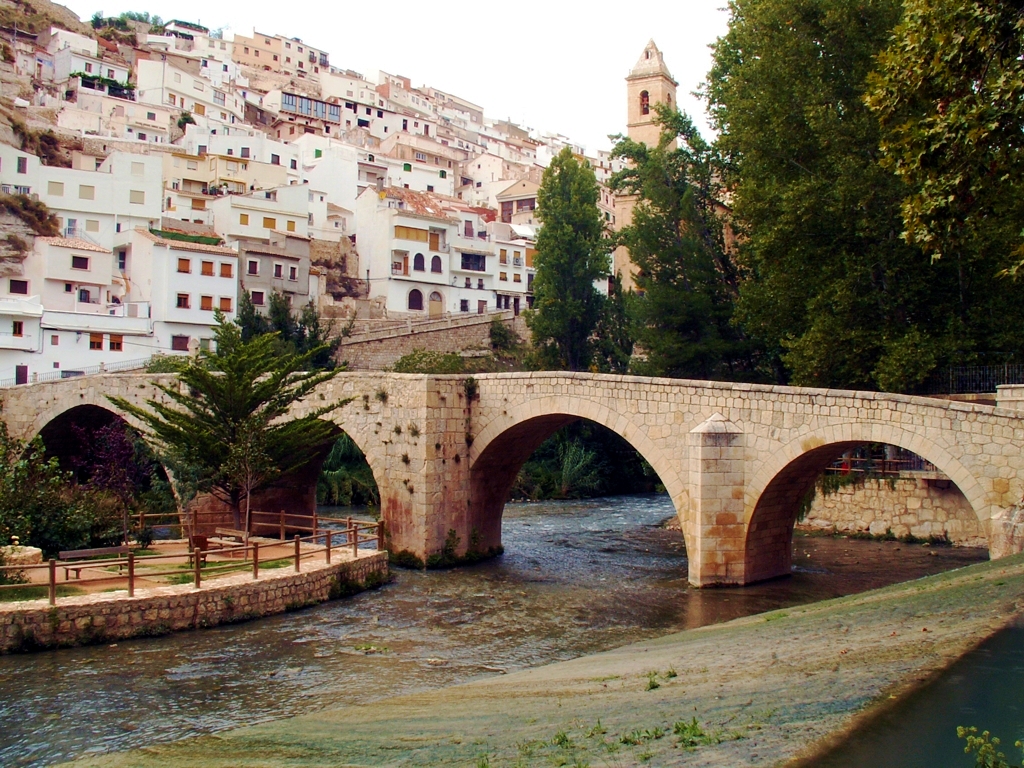
ROMAN BRIDGE
The origins of this bridge can be traced back to the Roman period of the Iberian Peninsula, an era when a significant Roman road would have crossed the River Júcar near this point—though scholars still debate its exact original location. Regardless, the bridge as seen today dates from the 18th century.
It was a compulsory crossing point on the Camino Real (Royal Road) connecting Castile and the Levant, gaining immense importance during the 14th and 15th centuries when it functioned as an inland customs post (aduana seca). Constructed from limestone ashlar bonded with lime and sand mortar, it features four spans finished with semicircular arches. The structure includes both curved and angular cutwaters (tajamares), designed to deflect the river’s current. The bridge’s surface consists of traditional cobblestone paving.
Today, the bridge remains in excellent condition and is still in active use, accommodating even the local vehicular traffic.