ALCALÁ DEL JÚCAR CASTLE
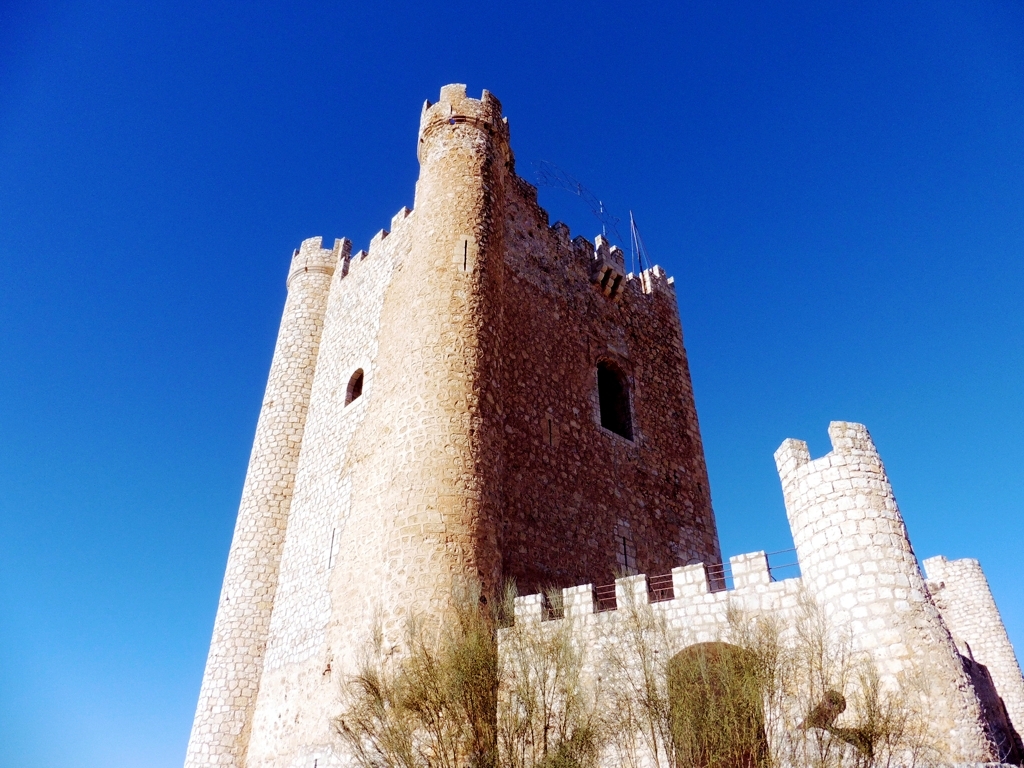
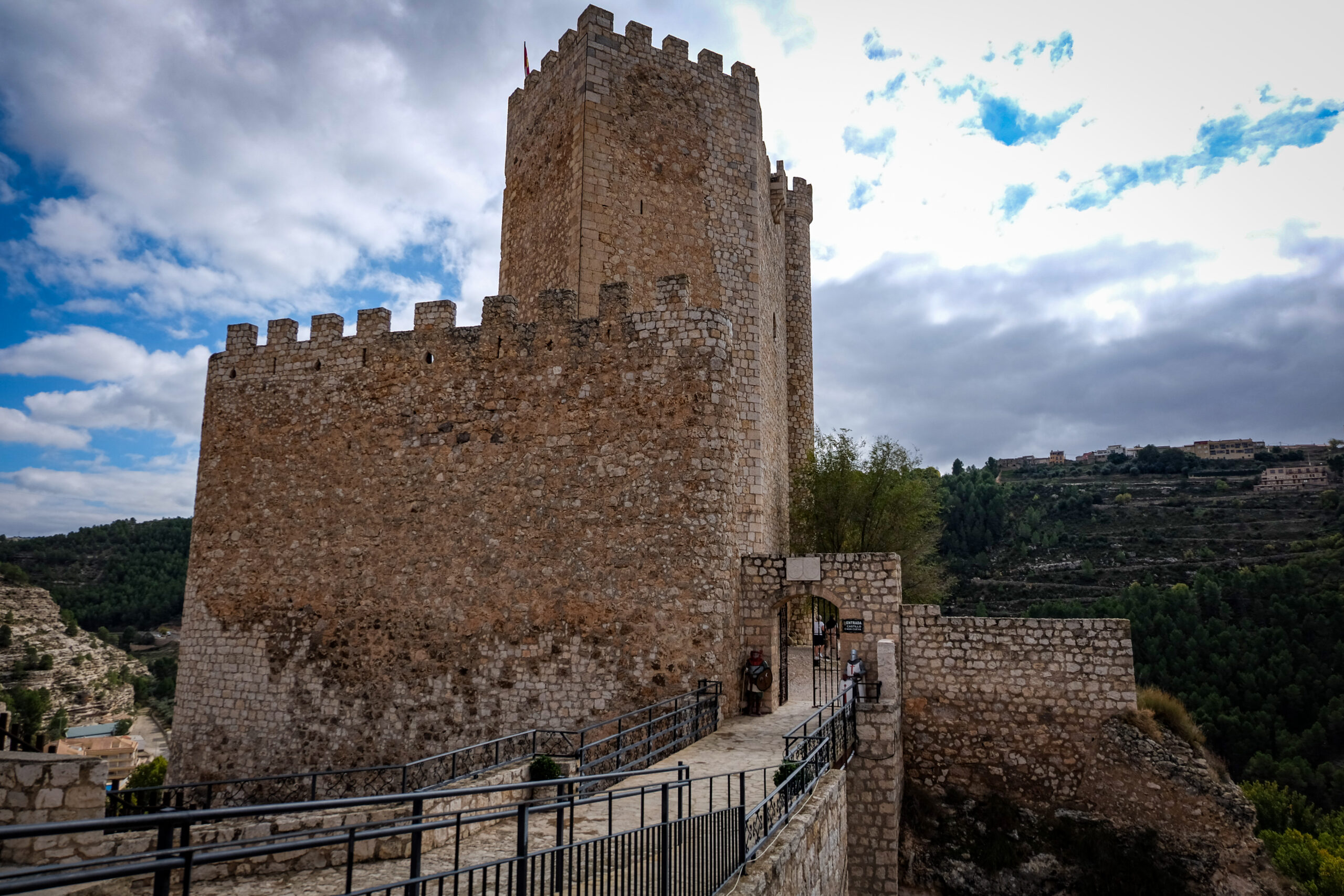
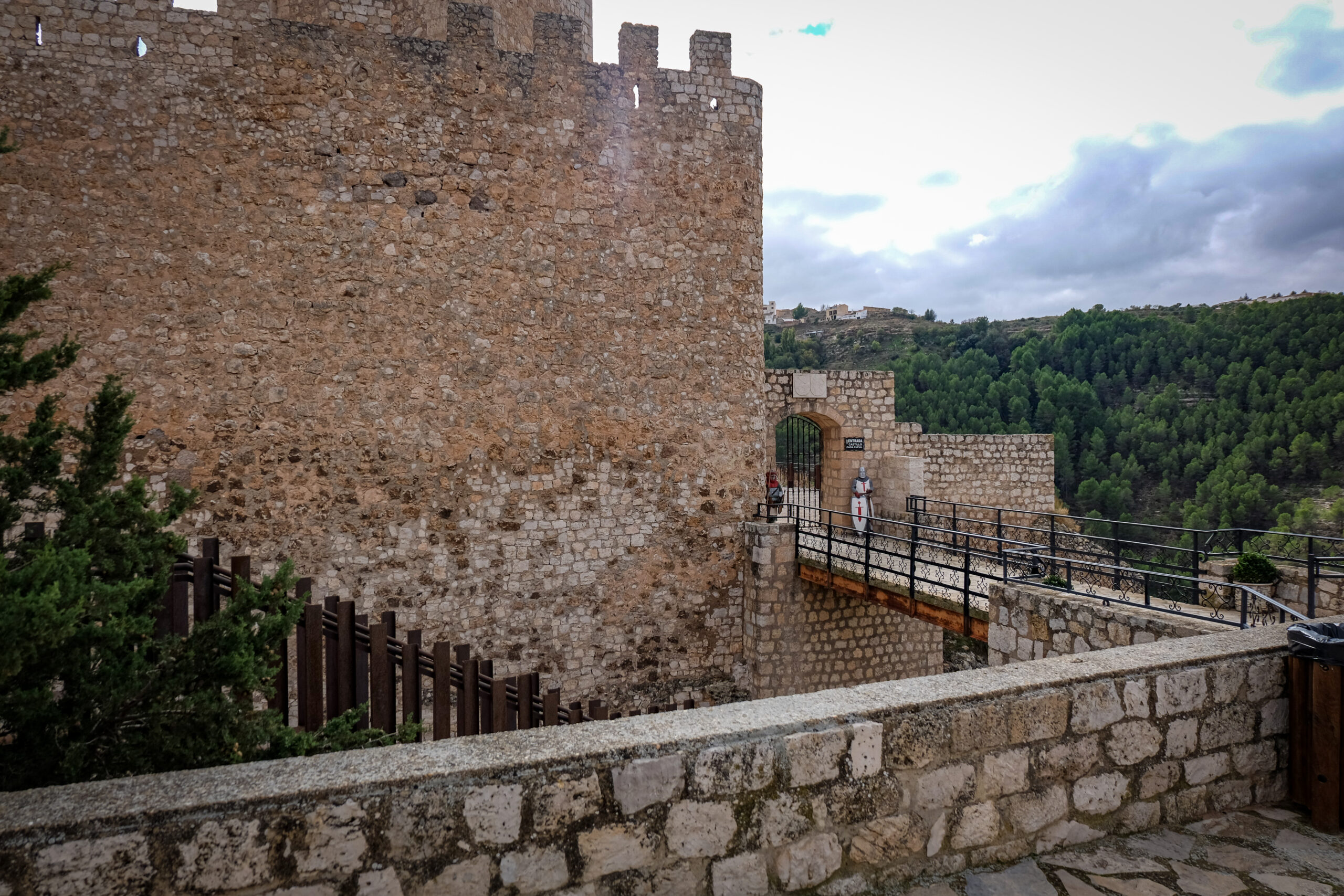
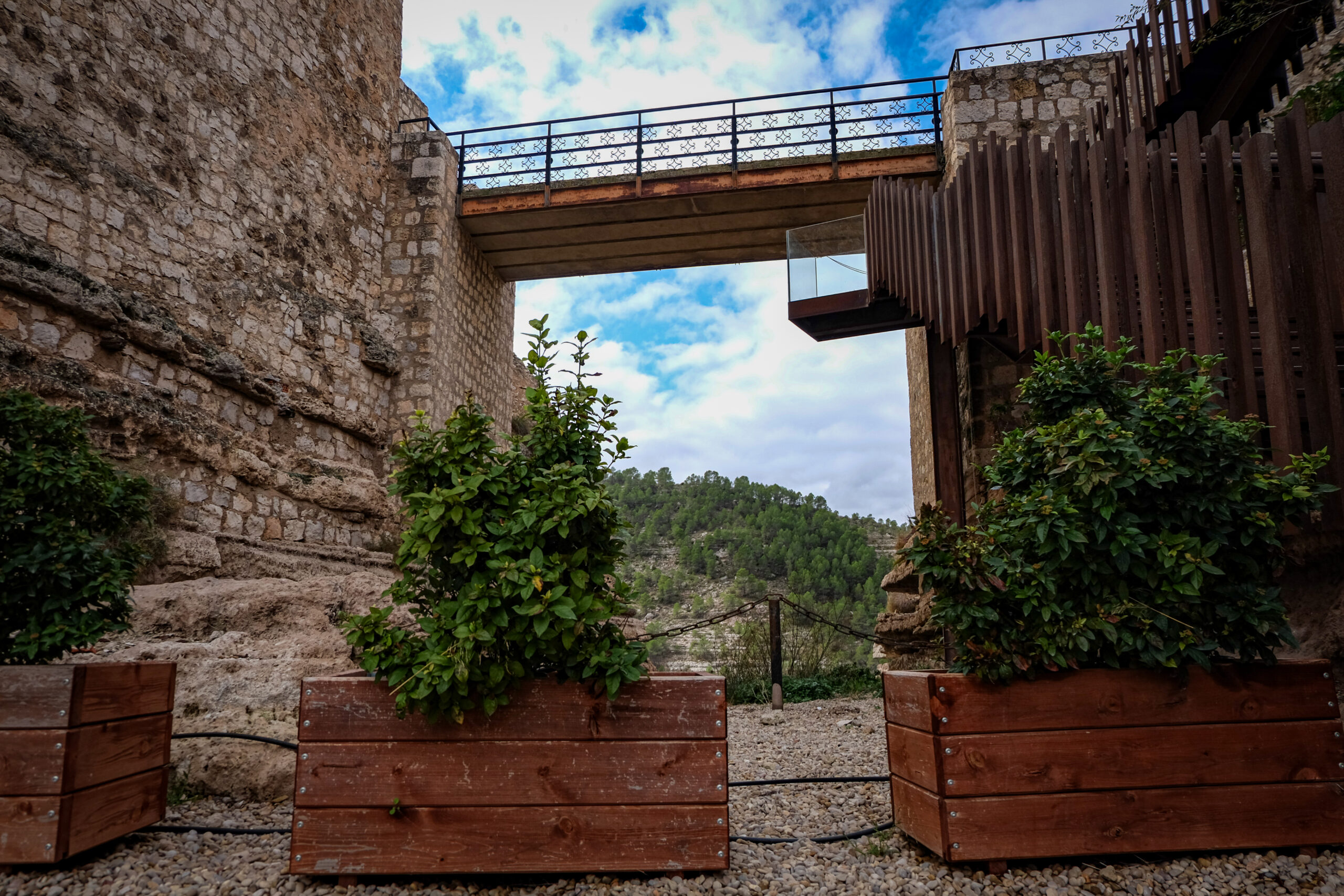
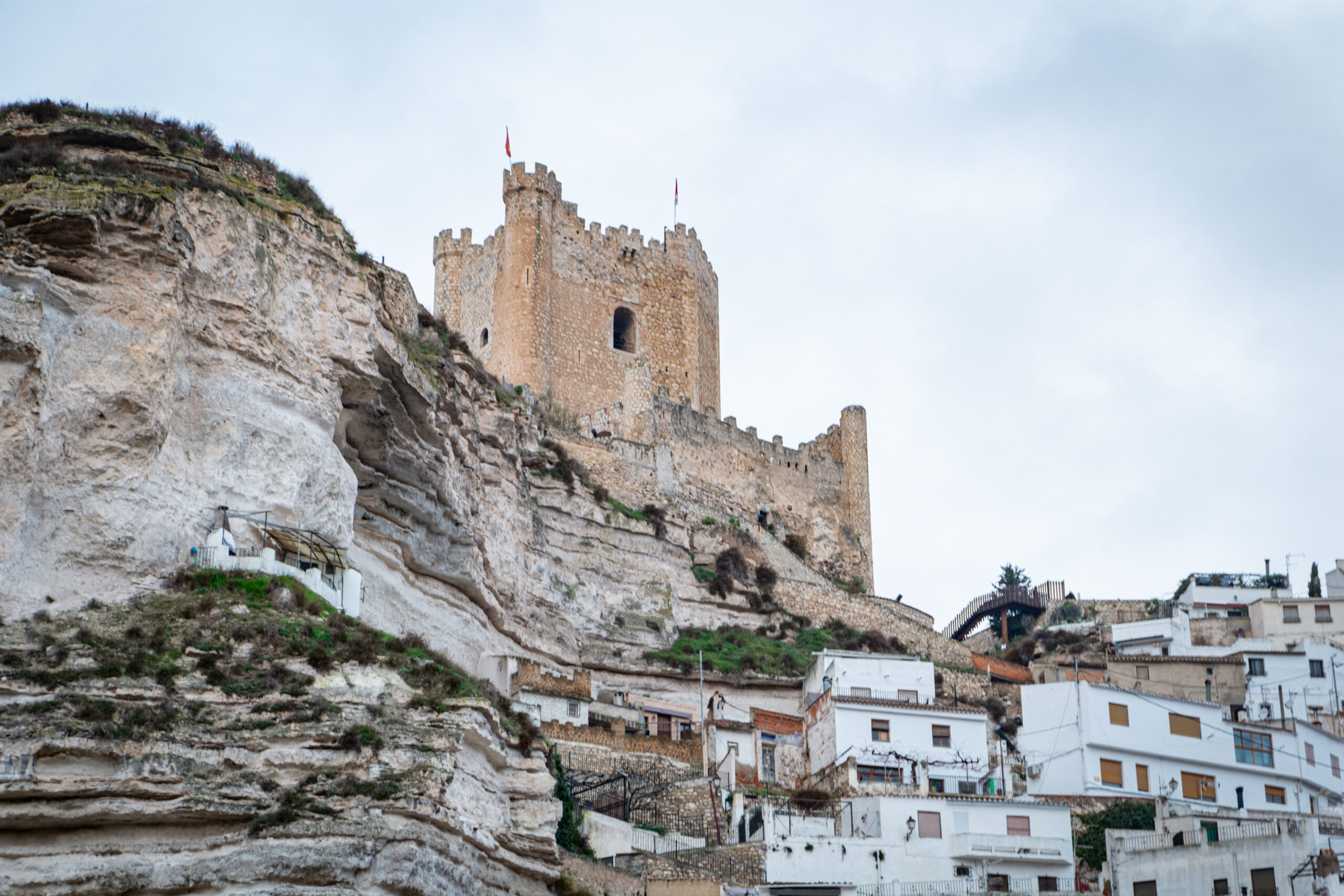
Erected upon a rocky prominence, easily defensible due to the narrow isthmus providing access and the sheer cliffs that surround it, the Castle of Alcalá del Júcar is likely of Almohad origin.
Following Alfonso VIII’s conquest of the Júcar region in 1213, this fortress passed into Christian hands. In the mid-15th century, during the era of Juan Pacheco, Marquess of Villena, the building’s structure was reformed. The most recent restoration took place in the middle of the last century. It serves as a fine example of Islamic architecture, featuring a pentagonal keep (Torre del Homenaje) and two small circular towers arranged over three storeys. Remnants of the ancient curtain walls still encircle the fortress. It is worth noting that Iberian and Roman settlements previously occupied this site, having also chosen this location as a vital vantage point for surveillance and defence.
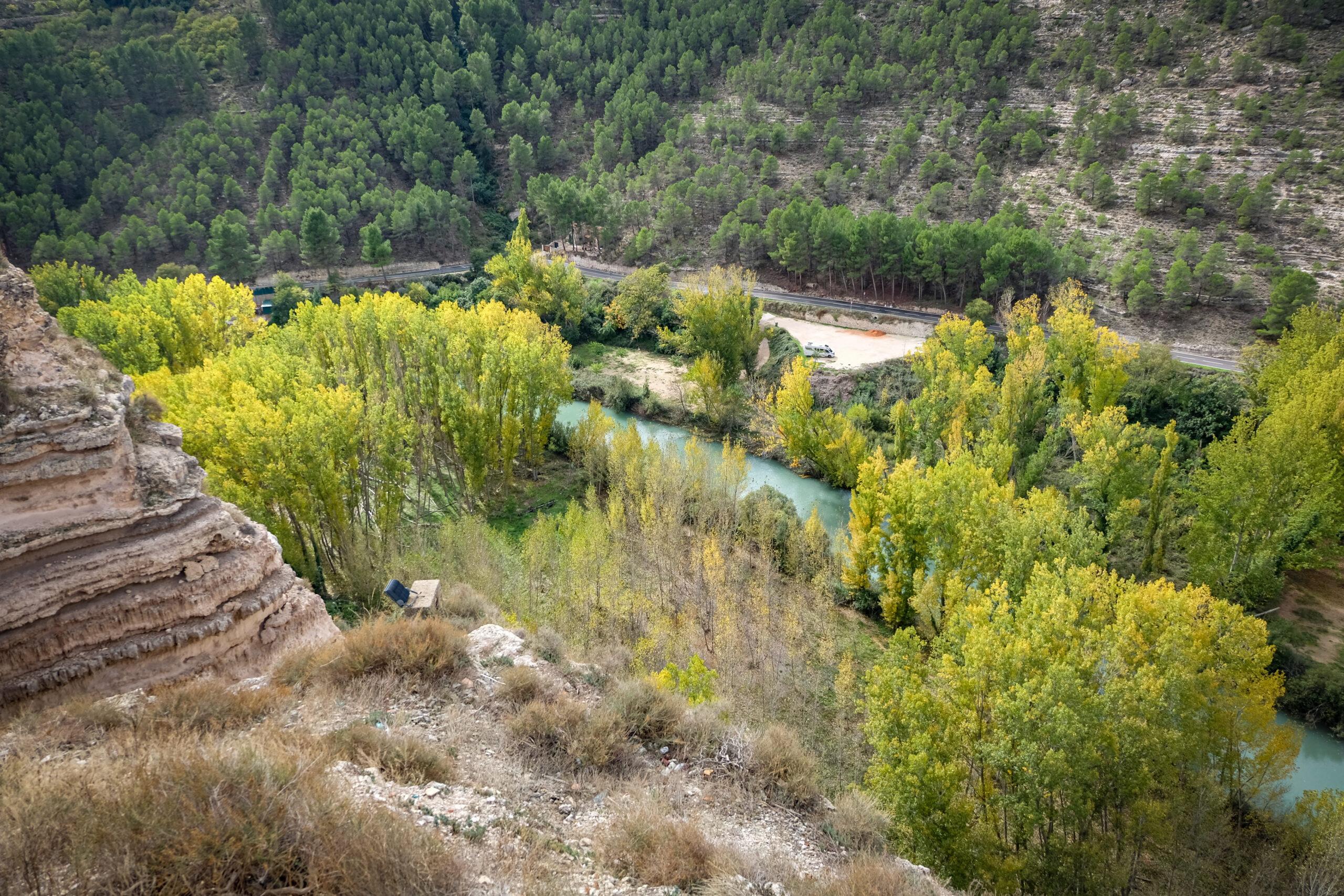
The views from the castle walls are splendid, offering a chance to enjoy the singular landscape that the middle course of the Júcar River has carved into the limestone rocks of the Manchuela plain. It illustrates the beauty with which humanity has adapted to this environment, creating one of the most picturesque villages on the Iberian Peninsula.
The castle is open for regulated public visits and serves as a cultural hub, hosting temporary exhibitions and performances.
Two legends regarding Princess Zulema endure here. In the first, she is abducted by the Moor Garadén to be converted to Islam and forced into marriage; however, Zulema chooses to leap from the top of the tower instead. In the second, Zulema is a Moor herself who, having fallen in love with a Christian knight, flees the castle of her father, Garadén, to settle in a nearby village… now known as Zulema.