San Benito Hermitage
The first historical reference to San Benito is found in an agreement on municipal boundaries between Chinchilla and Jorquera signed in 1316; specifically, this hermitage marks the boundary between both municipalities.
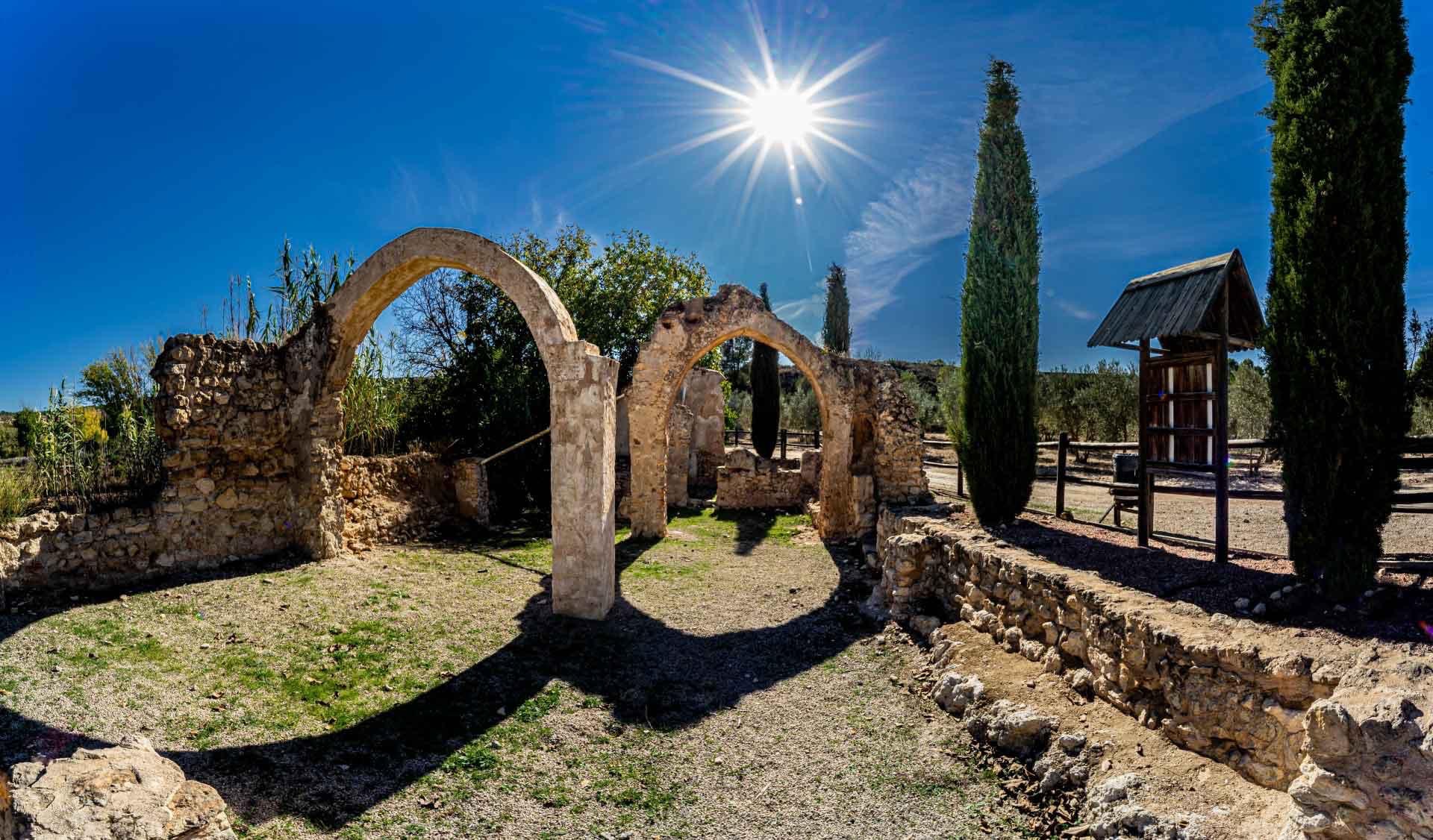
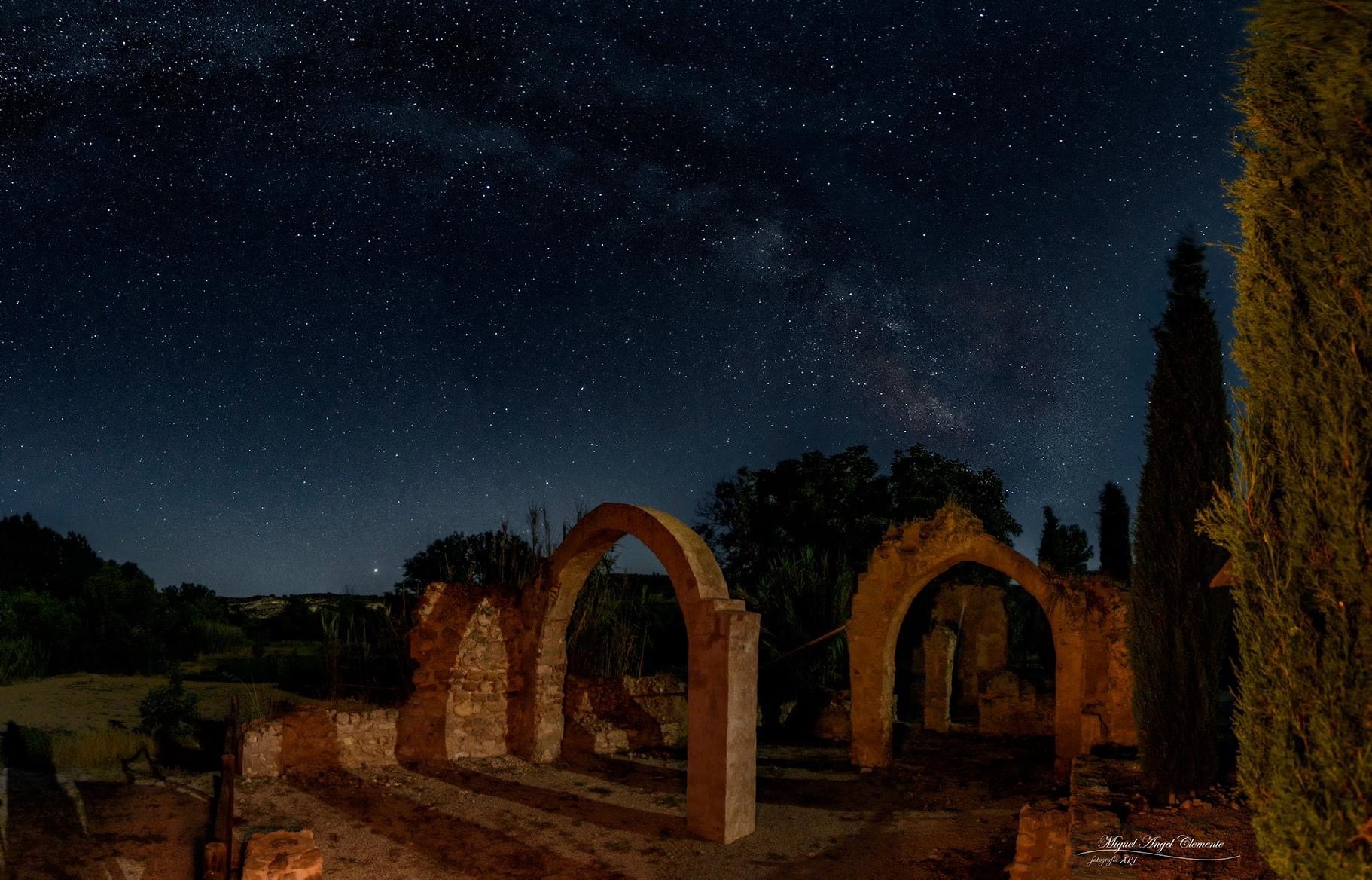
The hermitage is Gothic in style and is located 2.5 km from Valdeganga and almost 1 km from Puente Torres. Of Benedictine origin, the entire area where it stands is known as La Abadía. It is built with limestone bonded with mortar (a mixture of sand, lime, ash, and water) and finished with plaster. Two pointed Gothic arches are still standing, dating it between the 12th and 15th centuries.
At the back wall, what may have been the altar can be seen, along with two niches topped with shell-shaped domes. One of them is shaped like a cross, suggesting it held a crucifix figure, while the lower and larger niche most likely housed the statue of San Benito. It is also notable that one of the remaining arches bears a strange symbol, interpreted by some as a Greek cross with equal arms enclosed within a circle.
LEGEND: According to oral tradition passed down through generations, this place, known as El Santo, was once highly frequented and a place of great devotion, where a pilgrimage had been held since time immemorial. Devotees came not only from Valdeganga but also from nearby towns, especially from Chinchilla, as they apparently also brought a saint to this hermitage.
On that day, all kinds of celebrations and festivities were held in honour of the saint. In particular, a deeply rooted competitive game took place: the throwing of a Roman ploughshare, with the winner being the person who threw it the farthest. It was thrown without a run-up and with one arm; the ploughshare weighed 8 kg and was thrown with the tip facing upwards, aiming to achieve a 180-degree rotation so that it would stick vertically into the ground. One year, during this competition, a well-dressed figure appeared riding a white horse. Without saying a word, he took part in the throw and, according to witnesses, sent the ploughshare so far that it could not be found, as it crossed the riverbed. The rider then mounted his horse and left in silence, just as he had arrived.
Those present went from initial admiration to fear, believing that such a throw could only have been made by the devil. The news spread so quickly that fear soon took hold among the faithful, the pilgrimage stopped being held, and the hermitage was abandoned. After many years, a villager retrieved the statue and kept it in his home until it was later taken to the church. This valuable polychrome sculpture was damaged during the civil war, but it was eventually sold to repair the damage suffered by the church of the village during the conflict.