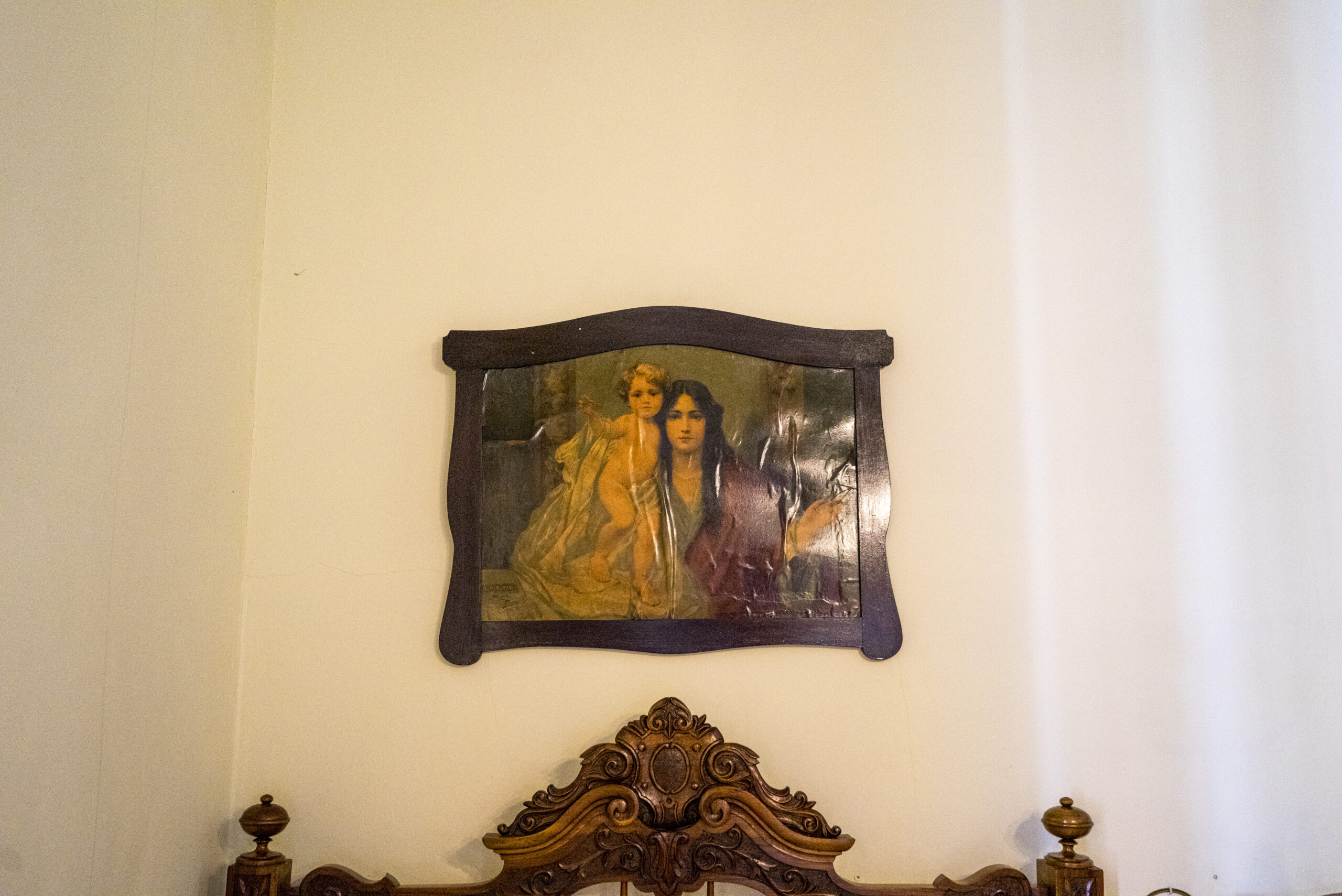
Mother and Child Painting
Originally from a matrimonial bedroom, the piece shared space in the home with other Marian devotional images or those dedicated to the Sacred Heart. But the iconographic kinship that traces this Virgin and Child is more extensive. It has numerous twin sisters, scattered throughout European chapels and auction houses.
The author of the original, the Viennese artist Rudolf Fuchs, created female images imbued with the exotic eroticism of the late nineteenth-century Salons. However, another facet of fin-de-siècle painting prevails in this piece: the need to massify the model most consensual for the representational regime in force.
As an expression of a new aesthetic of devotion, the Virgins of the period disqualified the meditative and sorrowful mysticism of the traditional prints. The images that proliferated in their place grew in sentimentality and childishness, to become efficient visual manuals of behavior. Thus, the young girls who repeated before these icons the ritual prayer, learned from their mothers or religious teachers, internalized the model to imitate. Kind, restrained and capable of sublimating hormonal impulses to convert them into an impeccable appearance, Mary – or the new Eve – annulled the difference between purity, admirable appearance and a code of behavior that cemented the new social order.