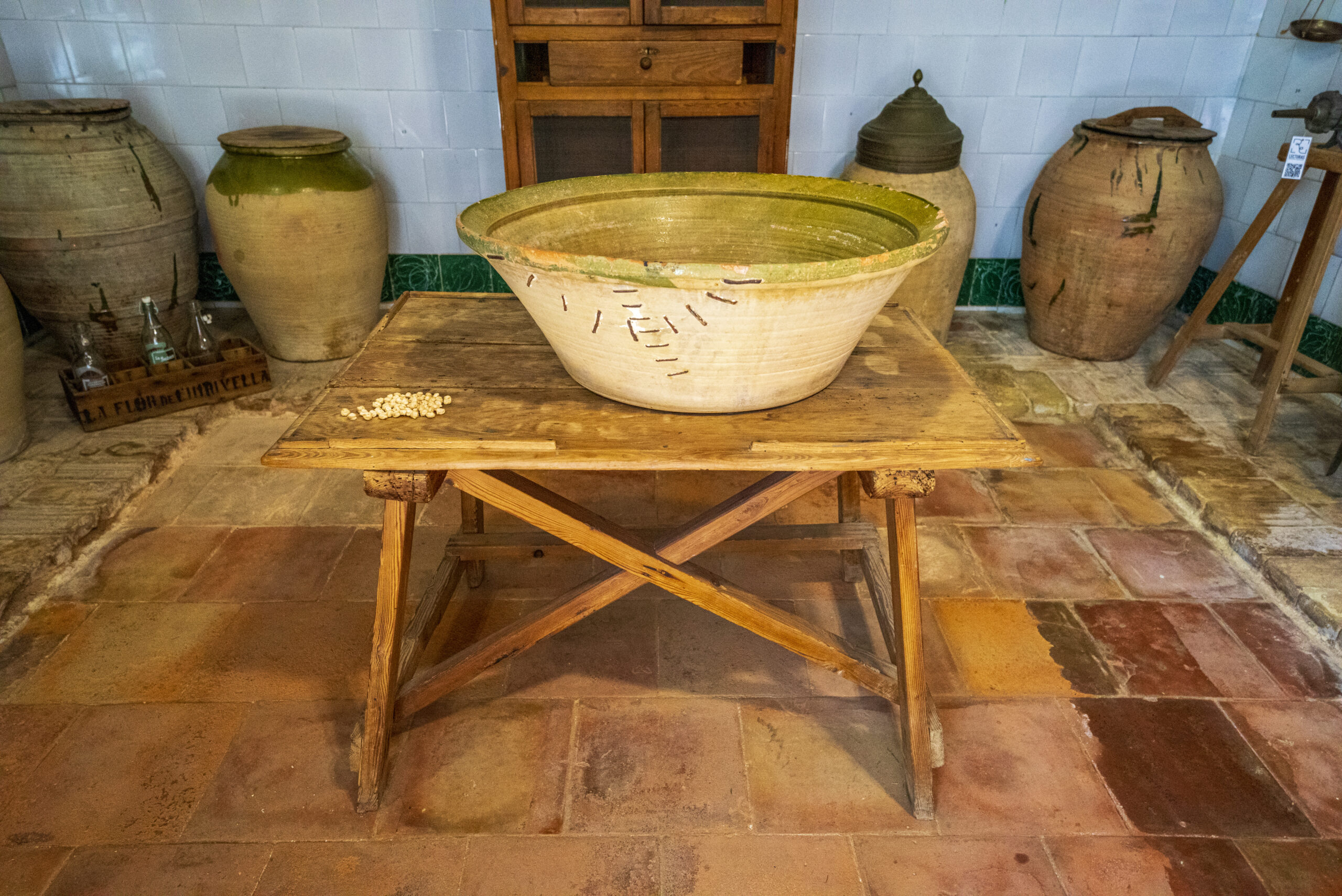
Basin and Slaughtering and legume picking table
The basin is an inverted truncated cone-shaped vessel, manufactured in different sizes, although, in general, it was usually large. It was used for culinary purposes (preserves, sausages, bread dough) or hygienic (such as bathing children or washing clothes). This container shows repair marks, specifically some staples. The lantern wheeler went through the houses repairing the floor that was broken by inserting staples or staples. Once the staples were fixed, the vacuum was filled with paste to avoid liquid losses. Repairs were always carried out on the outside of the container. This was another of the trades that maintained a circular economy based on exploitation.
Wooden table with slats on the corners used to choose the legumes. This operation was carried out to select those legumes that were in a position to be cooked and discard the stones, chicks or other elements from the field. This type of tables were also used to carry out the slaughter of the pig, usually in winter, near Christmas. From this tradition comes the Spanish saying “a todo cerdo le llega su San Martín” (‘every pig gets its own Saint Martin’), which refers to the fact that everyone has to pay their debts when the time comes.