Arab Baths
The Arab Baths of the town of Torres Torres, in the Camp de Morvedre region, are possibly the best preserved in the entire Valencian Community. These public baths from the post-Islamic period are located near the current Church Square, next to the cistern that supplied them with water.
The exact chronology of their construction, which follows the classical typology of the Islamic hammam, is still not fully defined, and several hypotheses exist regarding their origin.
The architect and researcher Juan Corbalán de Celis suggests in his article “La actual plaza de la Iglesia de TorresTorres” that the baths may even predate the Christian reconquest, since the site lost importance afterwards and it would make little sense to build such a structure at that time.
Other studies conducted after archaeological works in 2003 point toward a later construction during the 14th century, a dating accepted in the General Inventory of Valencian Cultural Heritage. The first known documentary reference dates from 1555.
Regardless of their date, the baths reproduce the traditional layout of a hammam. They were declared a National Monument in 1938 and are among the three best preserved Arab baths in the Valencian Community.
Finding baths of this type in a settlement with a clearly military origin is remarkable. Torres Torres stands on the historical Palancia route, a traditional communication corridor between Aragon and Valencia. This made it a stopping point for travellers, which explains the presence of simple yet significant baths despite the small population.
Architecturally, this makes sense: the entrance to the baths is located on the north façade, where the royal road likely passed, following the old Roman route. The baths ceased to function as a public establishment after Christianisation. However, they may have been reused as a water deposit connected to the nearby cistern, possibly contributing to their excellent preservation.
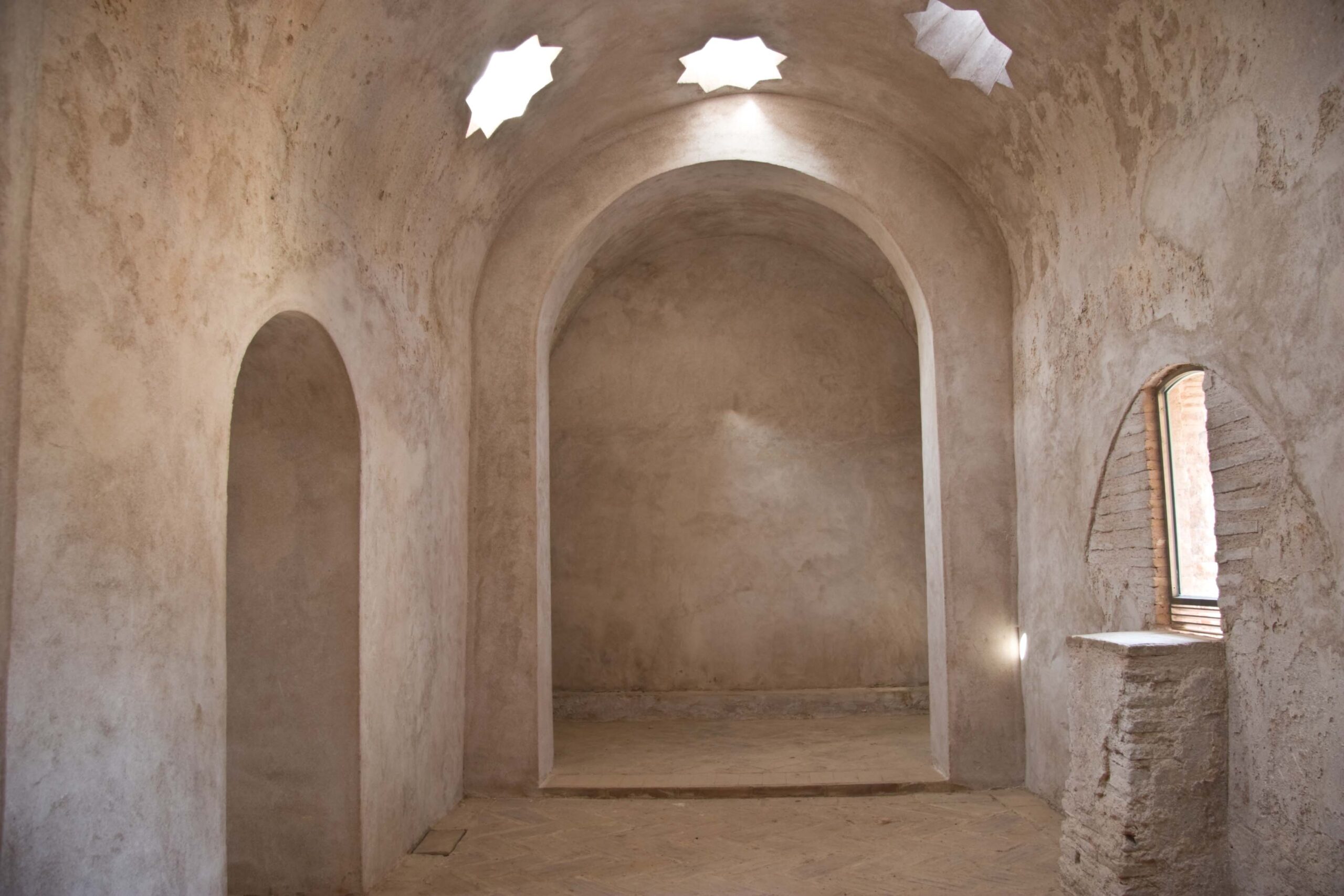
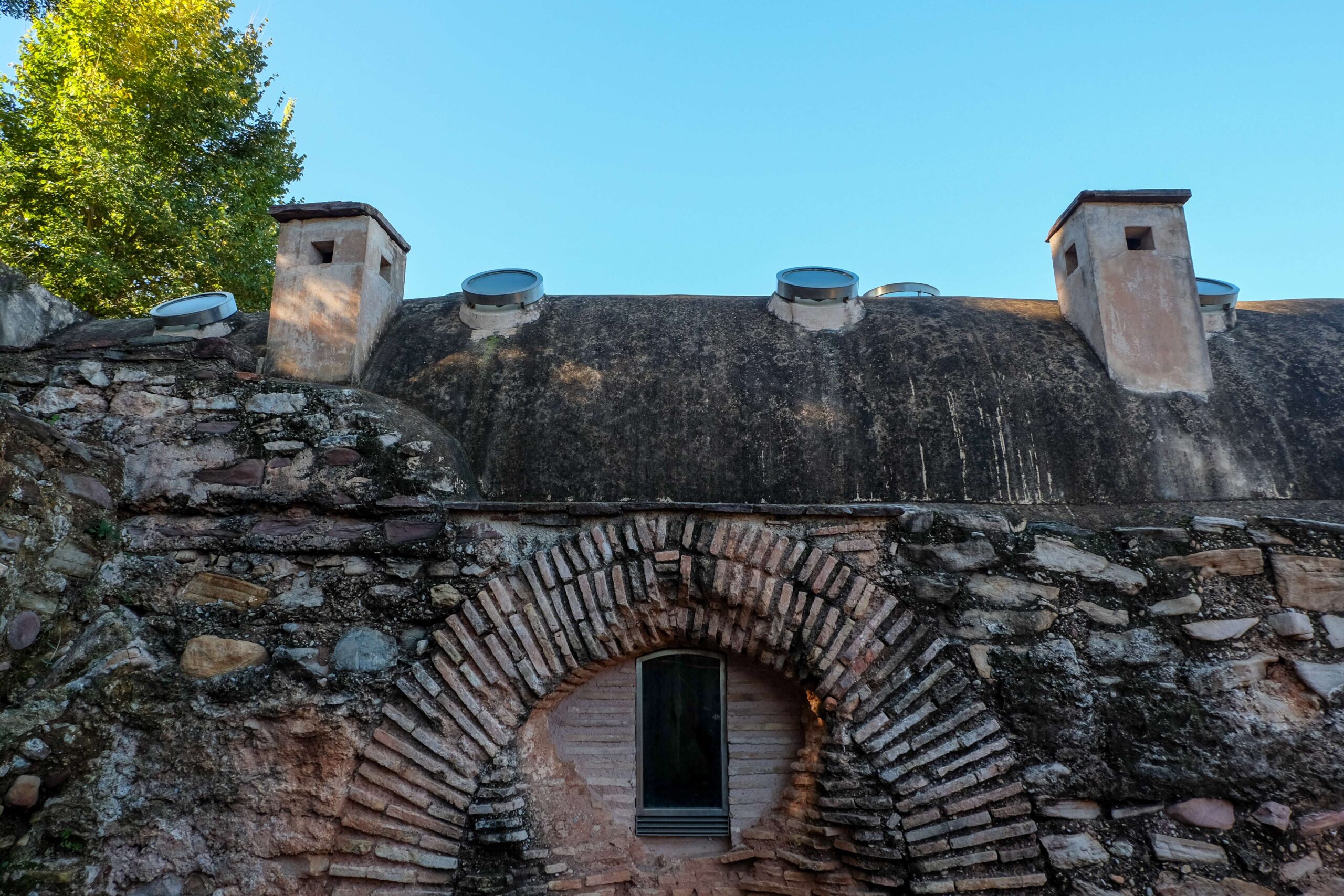
The complex consists of three rectangular rooms with vaulted roofs arranged in parallel, plus two small annex spaces: one for heating water and another serving as a latrine.
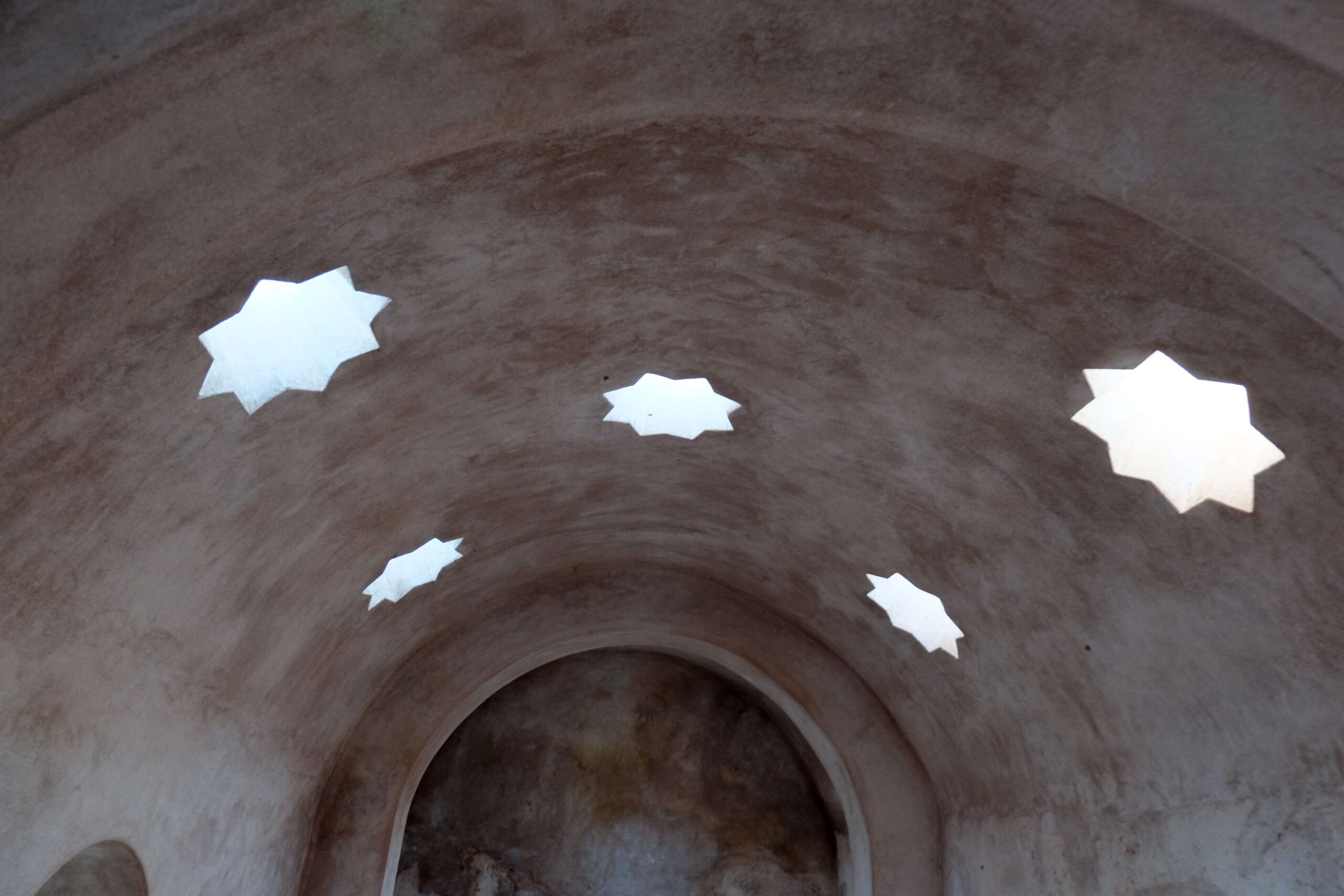
The main rooms are covered by barrel vaults at the ends and a lowered vault in the centre. Star-shaped skylights illuminate the interior. These correspond to the typical hammam bathing rooms.
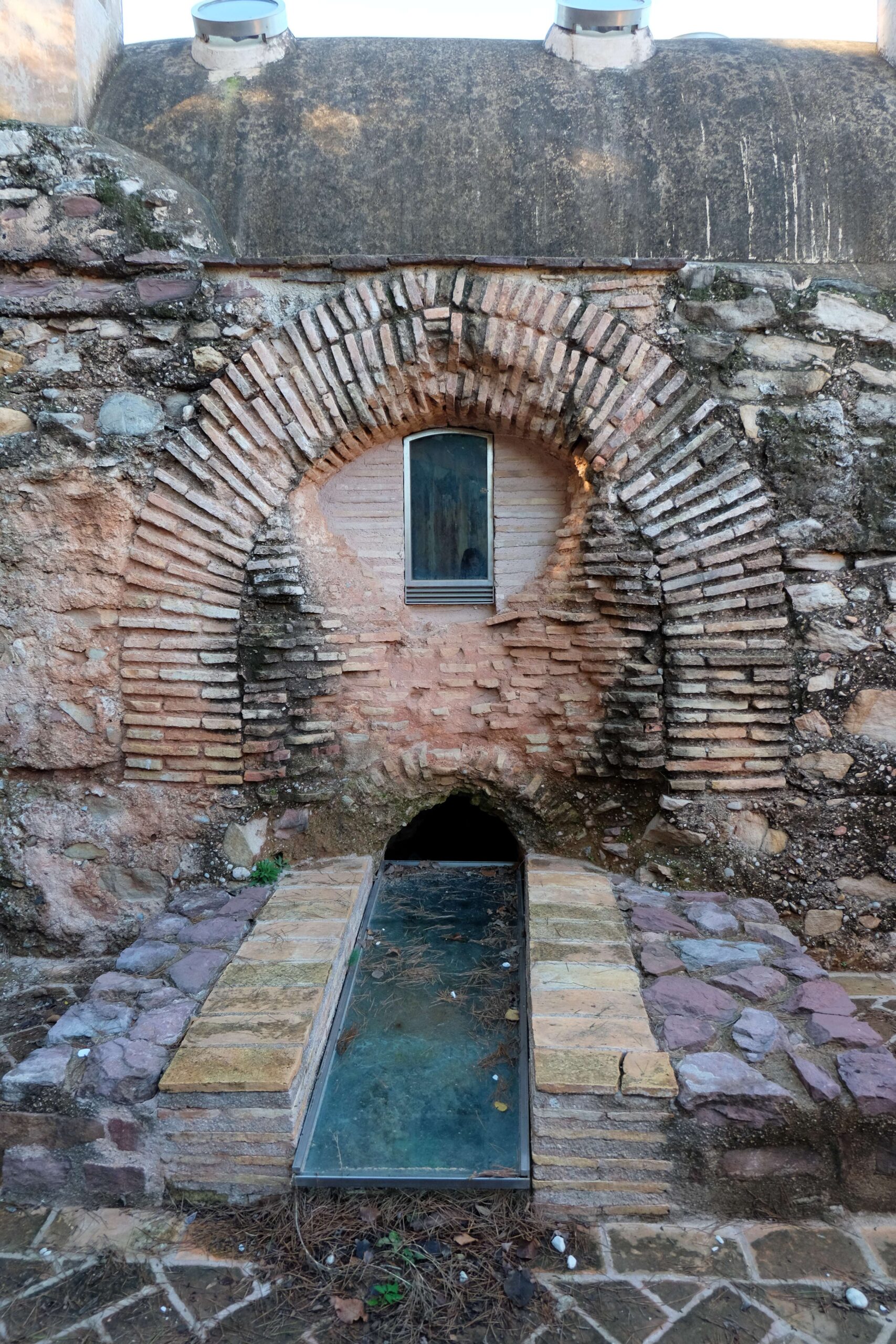
The central room is the warm bath (bayt al-wastani), visually divided by two brick semicircular arches. Attached to it is the hot room (bayt al-sajun), following the same layout. Next to it is the furnace room with a wood-burning oven.
On the western side is the cold room (bayt al-barid), which lacks the structural arches seen in the other rooms. Next to it are the former latrines. Circulation between rooms was perpendicular to the main naves.
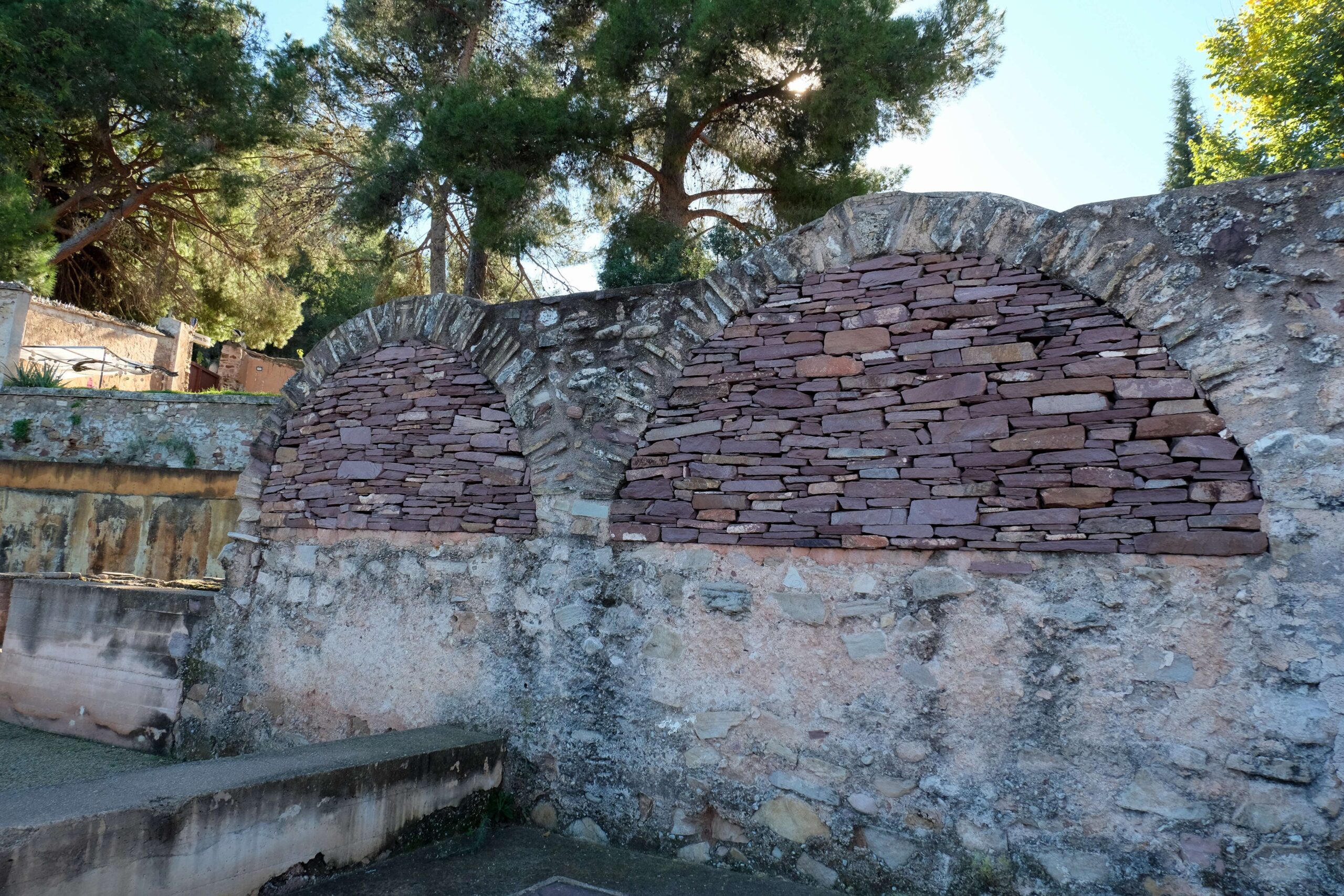
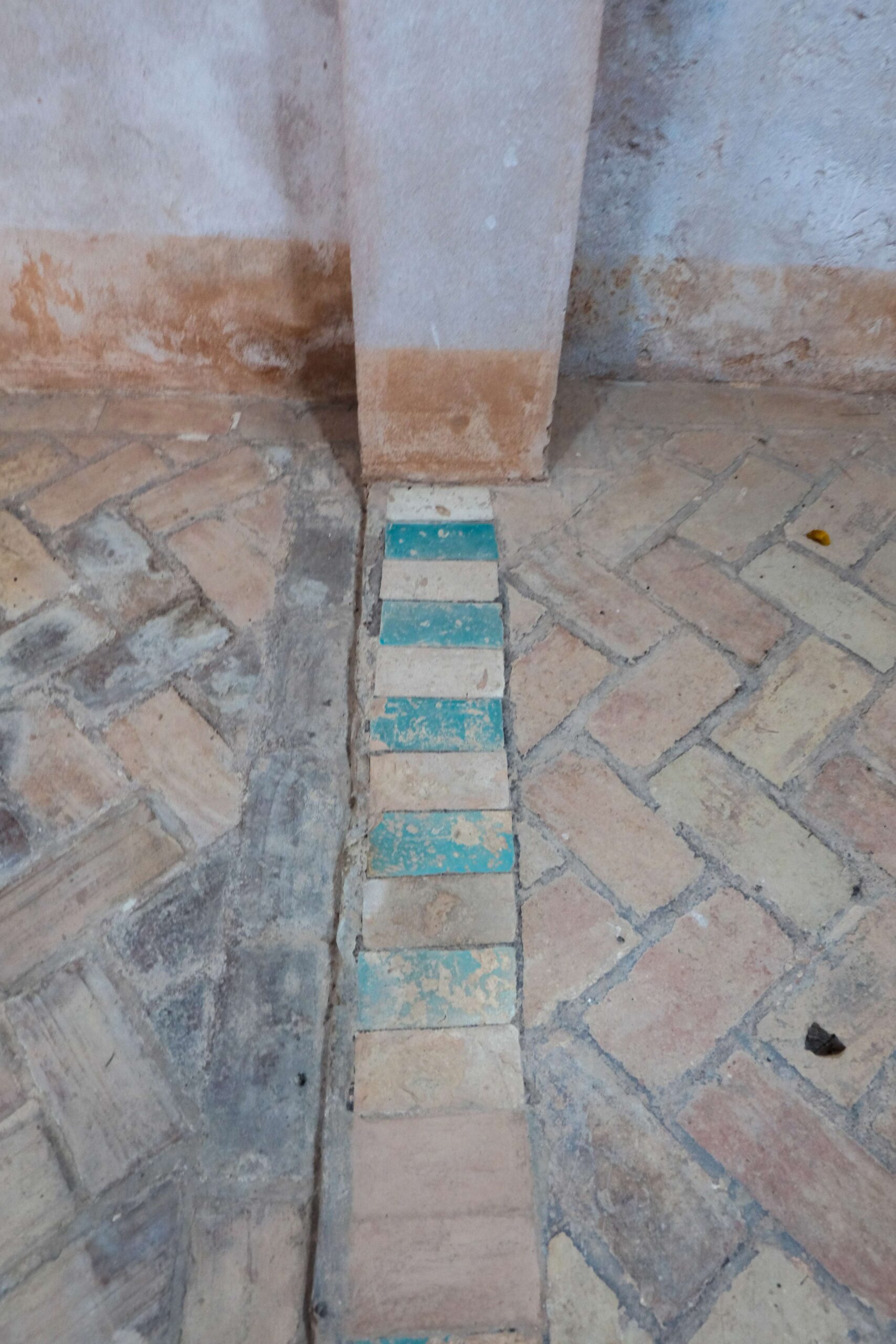
The structure is almost rectangular, built in masonry following Arabic construction techniques. The floor of this protected monument is made of fired bricks laid in a herringbone pattern.