Chapel of the Virgen de la Fuente
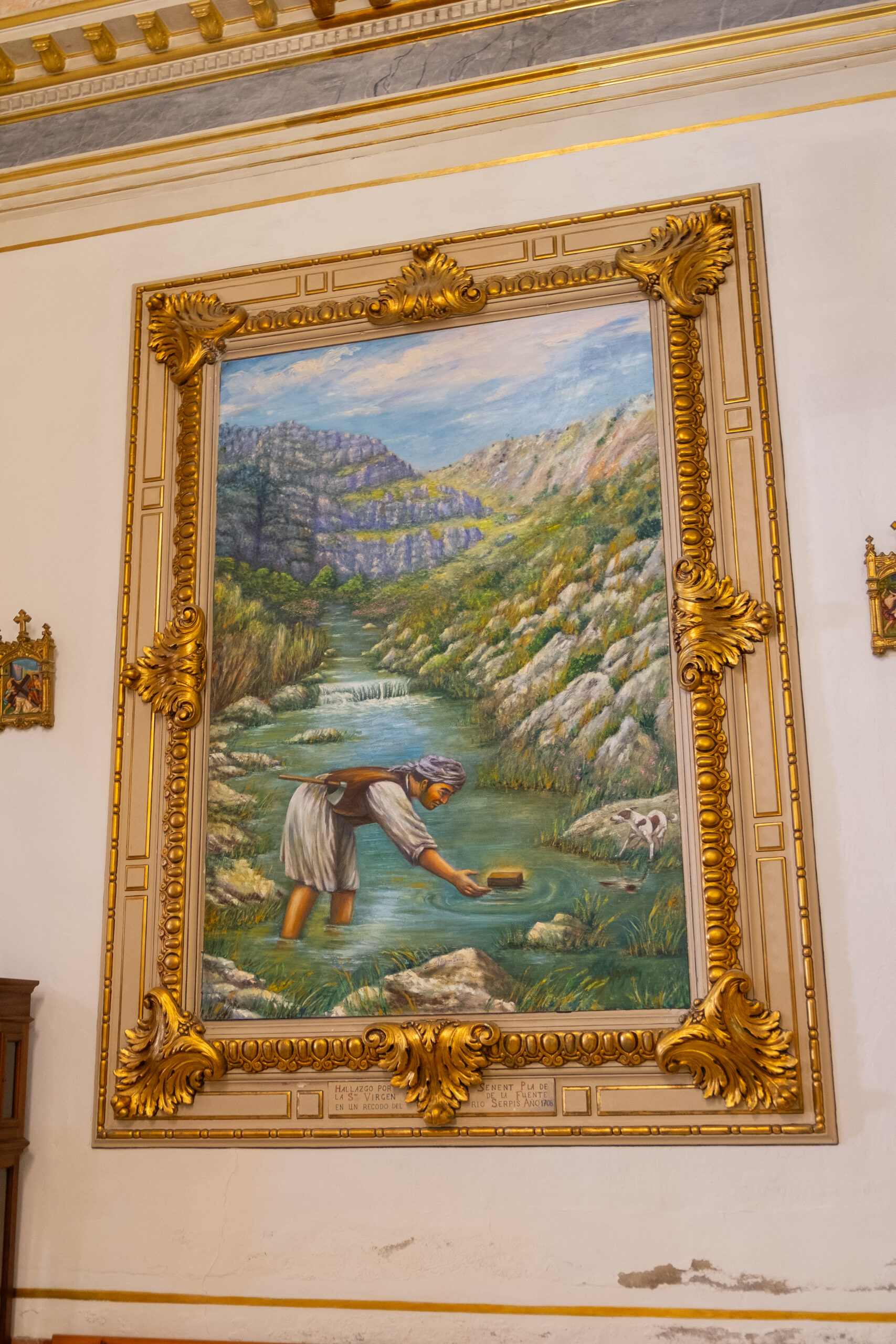
The tradition of the municipality tells that on 17th August 1708, a woodcutter called Senén Pla, who was cutting wood on the banks of the river Serpis, found a small box sailing against the current. When he approached and opened it, he discovered a sculpture of a Virgin carved in polychrome wood.
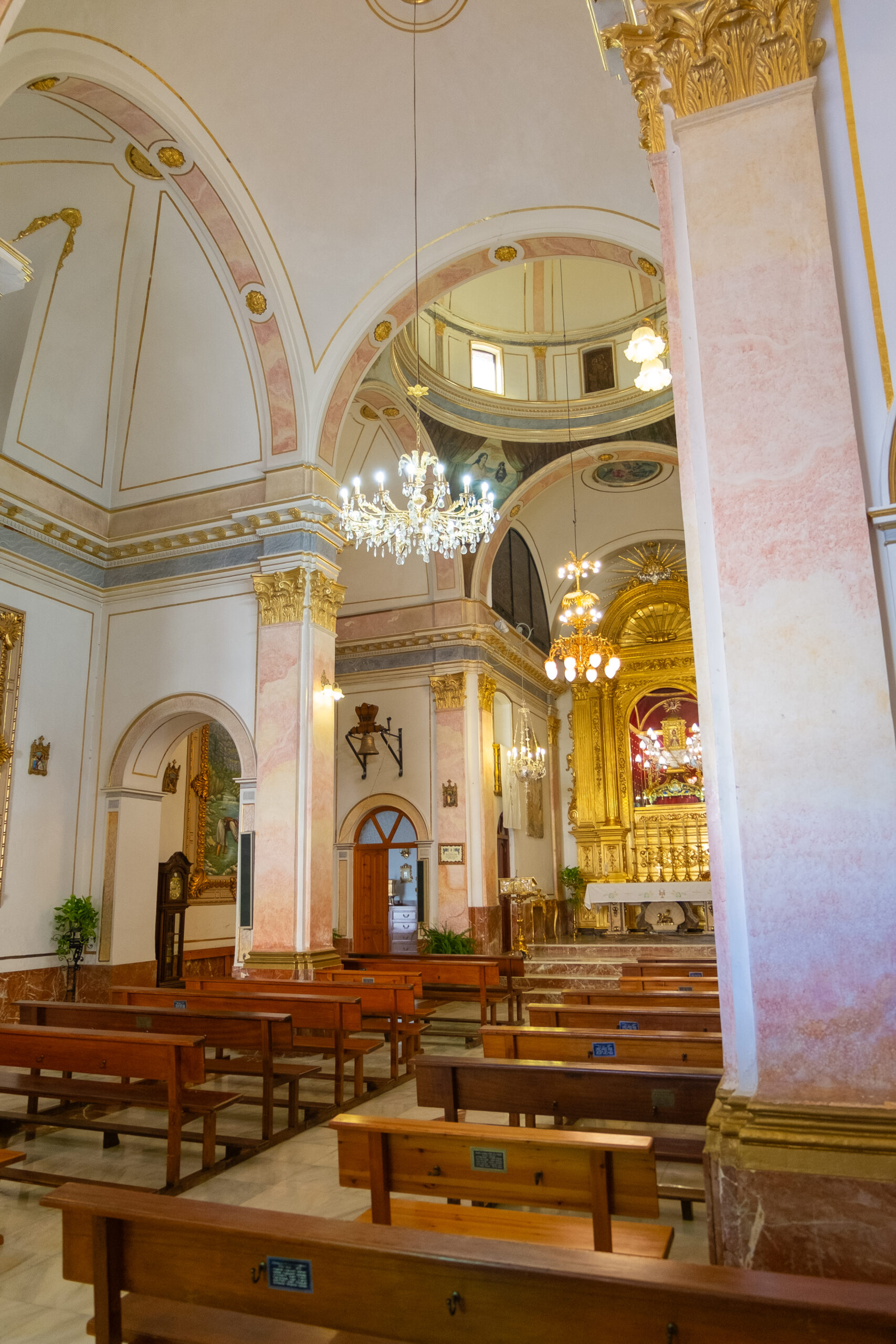
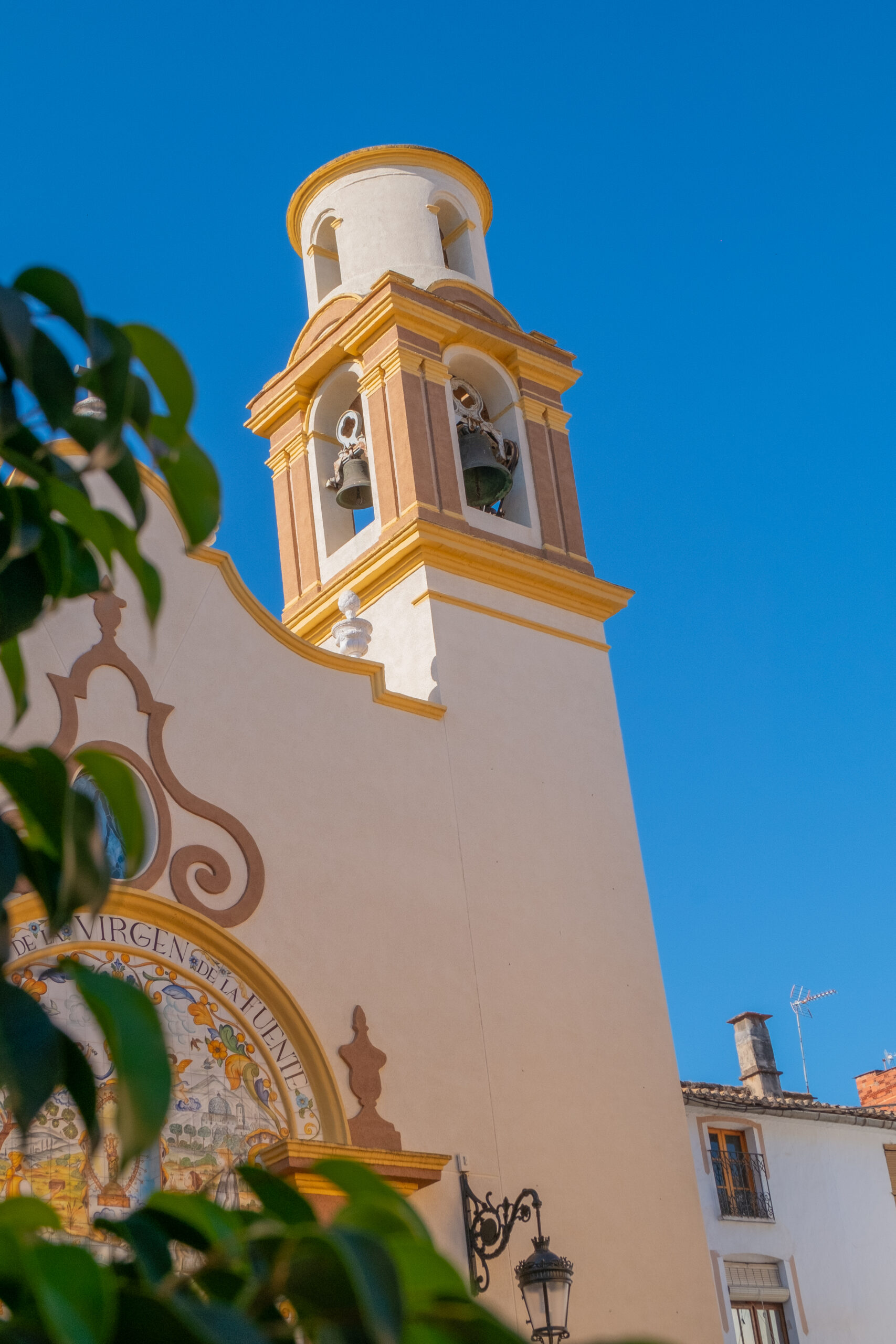
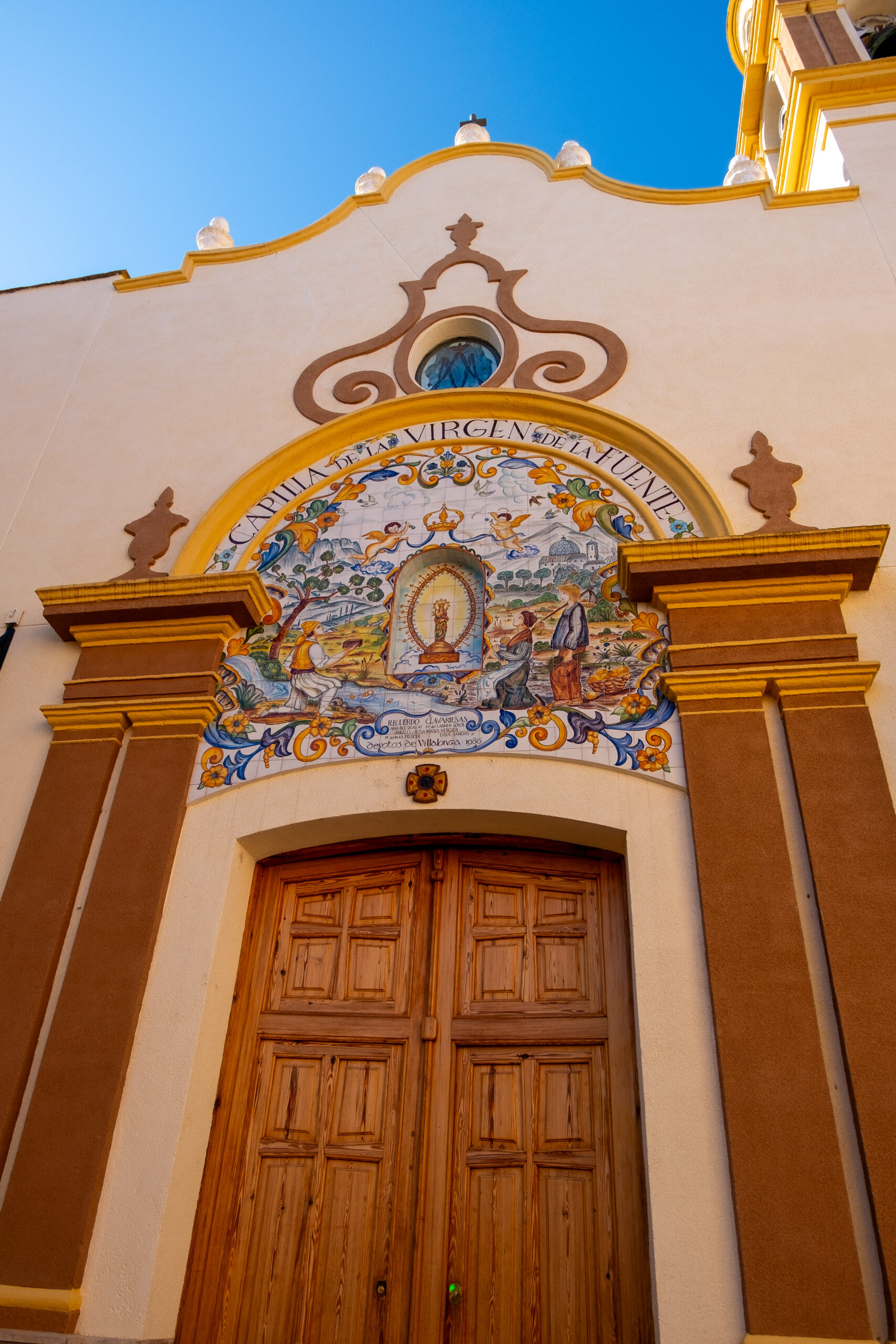
The Chapel of the Virgin of the Fountain of Villalonga is a neoclassical and baroque style building. It has a façade reminiscent of Baroque, with three naves and side chapels connected by semicircular arches supported by composite pilasters. It has a choir raised above the entrance and a bell tower at the foot of the building. The upper part of the façade is notable for its undulating shape, crowned by five decorative vases, four adorned with pine cones and a central one with a cross-shaped top. Although this structure partially hides the orange dome that covers the transept, the traditional blue tiles of Valencian Baroque can be seen on the outside.
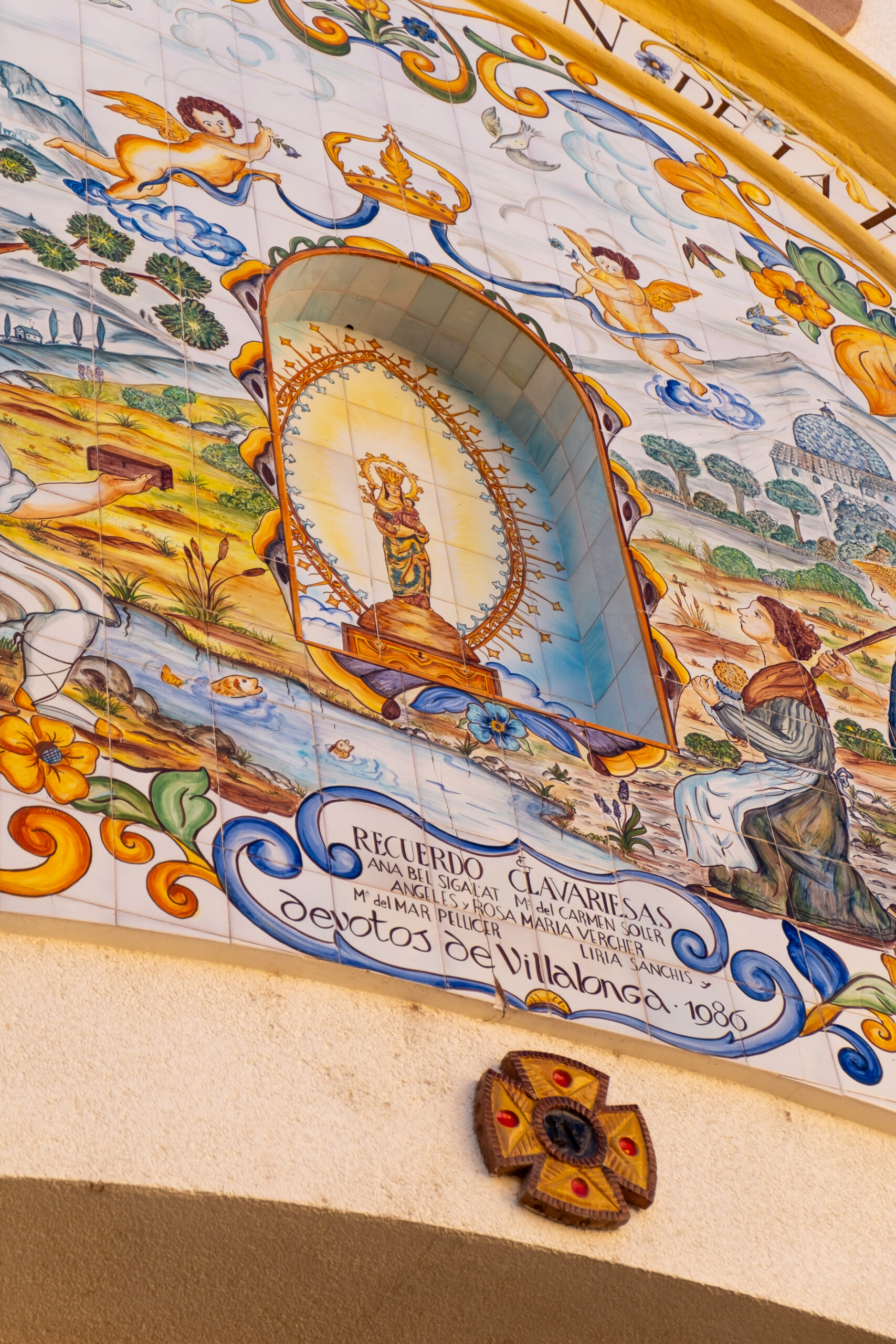
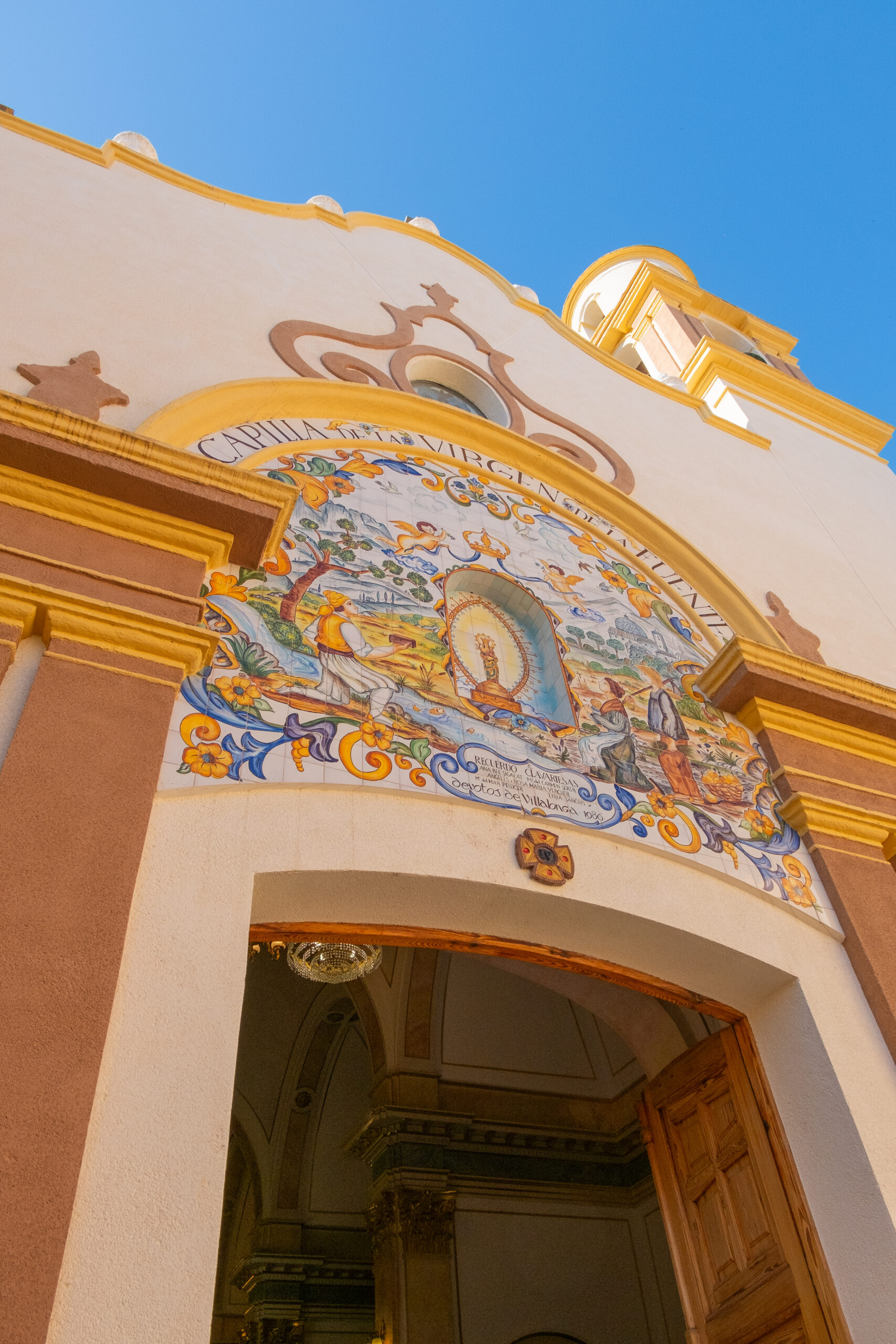
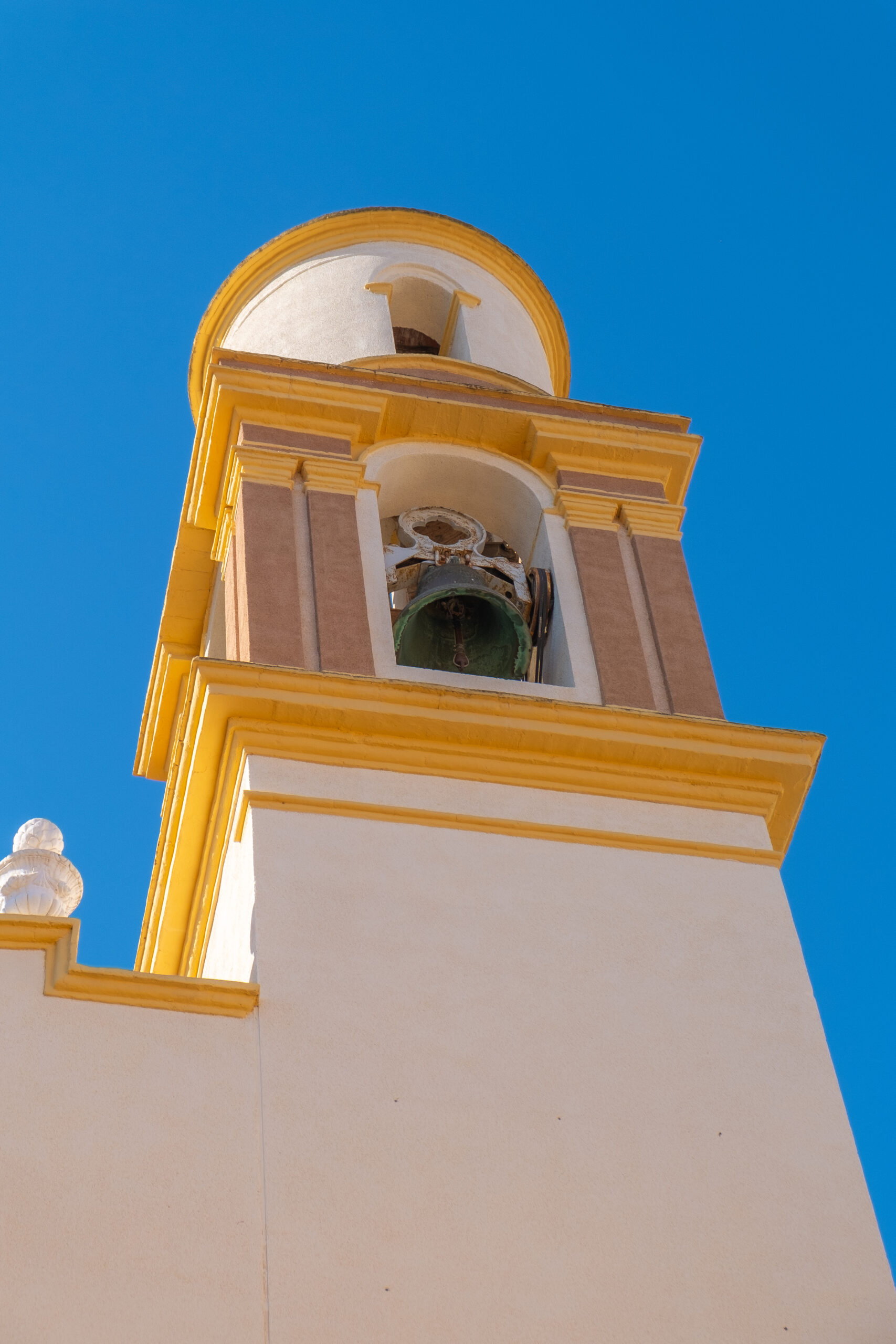
The plan of the building is longitudinal, with three naves and a dome supported on pendentives in the transept. On the façade, there is an undulating cornice decorated with vases and a central oval that houses the anagram of the Virgin Mary (*Mater Amatíssima*). At the bottom of the main door, a circular pediment includes elements alluding to the discovery of the Virgin and the miracle of the fountain. The central niche of the façade contains a representation of the Virgin of the Fountain. The bell tower, attached to the right-hand corner of the façade, follows the typical style of 18th-century Valencian churches.
Inside, to the left of the altar, is the sacristy, which preserves a painting of Father Joan Nogueroles Esquerdo, the main promoter of the construction of this chapel. His remains rest in the chapel itself, a detail that underlines its historical and spiritual relevance.